Who are the big 4 AI agents?


TL;DR
- This article covers the landscape of autonomous ai systems that are currently dominating the enterprise market. We dive into the big 4 players—OpenAI, Anthropic, Google, and Microsoft—and how their specific agentic workflows is changing business automation. You'll learn which platform fits your custom ai development needs and how to integrate them into your existing tech stack.
The Rise of agentic workflows in business
Ever feel like you’re just babysitting your software? We’ve all been there—staring at a screen while a "smart" tool waits for us to click the next button.
But things are changing fast. We're moving away from tools that just sit there and toward ai agents that actually get stuff done. It’s the difference between a hammer and a carpenter. According to gartner, agentic ai is a top trend for 2025 because these systems can actually plan and execute tasks on their own. (Gartner Identifies the Top 10 Strategic Technology Trends for 2025)
Standard generative ai is like a really smart intern who only speaks when spoken to. Agents, though, they have "agency."
- Proactive vs Reactive: A bot waits for a prompt; an agent sees a goal and starts working. In retail, an agent might notice stock is low and draft a purchase order before you even check the dashboard.
- Multi-step Reasoning: They don't just give an answer. They break down big projects—like "onboard this new hire"—into steps like setting up email, scheduling training, and sending a welcome kit.
- Tool Use: They can actually use your software. Think of an agent in healthcare that doesn't just summarize a patient note but also updates the ehr and pings the pharmacy.
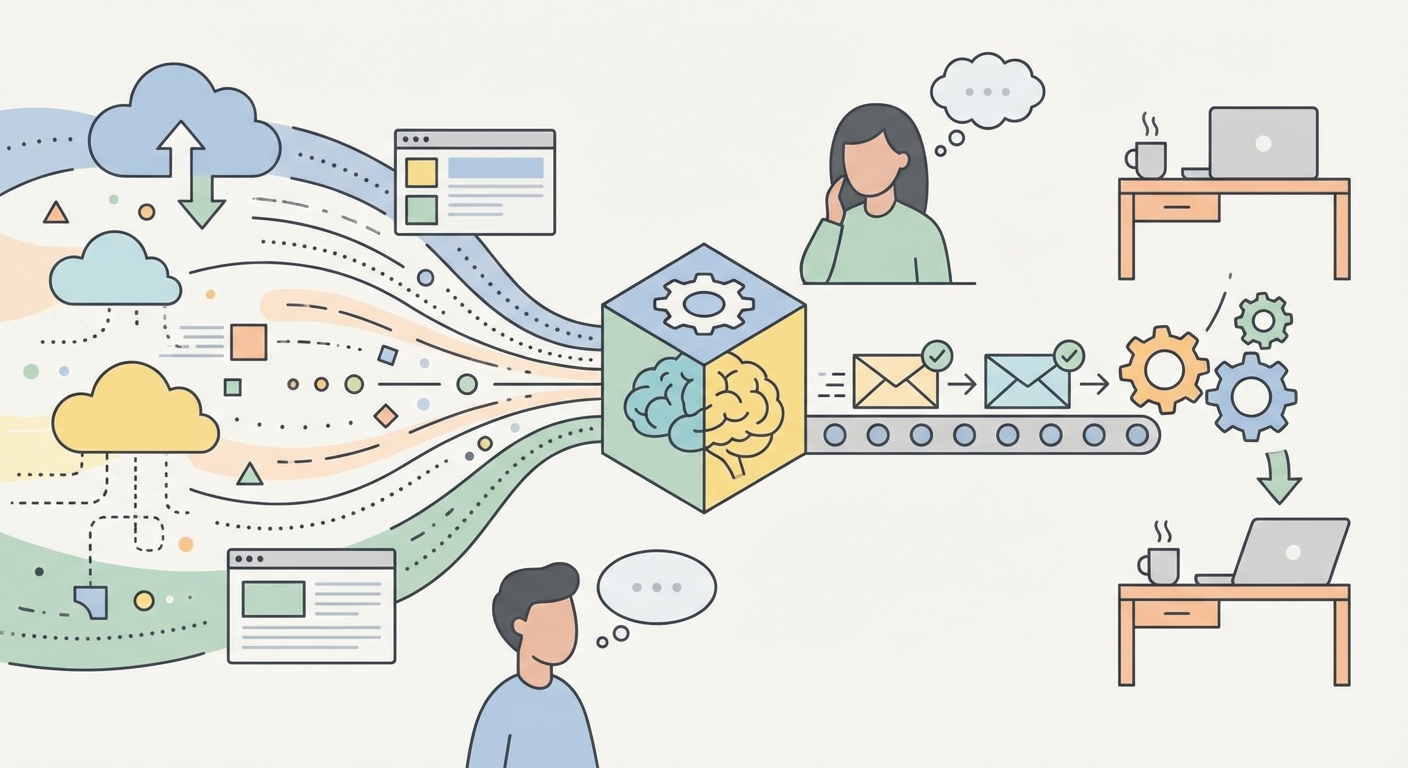
The following diagram shows how we're moving from a simple human-to-bot loop to a more complex system where the agent handles the middle steps without us.

Honestly, it's a bit wild to see an api call itself without a human in the loop, but that's where the value is. It saves us from the "click-work" that kills productivity.
Next, let's look at who's actually leading this pack.
Defining the big 4 ai agents ecosystem
If you're trying to keep up with who is actually winning the ai race, it's not just about who has the flashiest chatbot anymore. It's about who's building the best "digital employees" that can actually click buttons and finish a job while you're grabbing coffee.
The "Big 4" dominating this space are OpenAI, Anthropic, Microsoft, and Google. While they all do similar things, they're really split into two camps: the Foundation Model Providers and the Enterprise Ecosystem Providers.
The Foundation Model Providers: OpenAI & Anthropic
OpenAI is basically the 800-pound gorilla in the room, and for good reason. They’ve moved way beyond just simple text replies. With their upcoming "Operator" project, they're aiming to have agents that can travel through your web browser to book flights or write code without you watching over their shoulder.
- GPTs and Customization: You've probably seen the "GPT Store," but the real power is in the enterprise api. Companies are hooking these up to internal databases so the agent doesn't just "know" things—it can actually execute workflows.
- Raw Reasoning with o1: Even with all the new players, many devs still find that openai's new o1 model series handle complex, multi-step logic better than almost anyone else. Unlike gpt-4, o1 is specifically built for "reasoning"—it actually thinks through a problem before it starts typing. (Why is O1 such a big deal??? : r/OpenAI - Reddit)
- The Ecosystem Lock-in: Because so many tools already use their api, it's often the easiest "plug and play" choice for a business that's already started their digital transformation.
Anthropic is taking a totally different, and honestly kind of wild, approach. Instead of just talking to an app through a back-end connection, their new "computer use" capability lets Claude actually "see" a screen and move a cursor just like you do.
A recent report from Anthropic (2024) shows that their models can now perform complex tasks by interpreting screen images and executing keyboard commands, which is a huge shift for automation in legacy systems.
- Constitutional AI: They’ve built "safety" into the core of the model. For industries like healthcare or finance where one wrong move is a legal nightmare, this focus on ethics is a massive selling point.
- Desktop Control: Imagine a research agent that opens a spreadsheet, looks up a company on LinkedIn, and then types a summary into your CRM. It doesn't need a special integration; it just uses the computer.
- Complex Research: Claude excels at long-context tasks. If you need an agent to read a 200-page legal filing and find the three clauses that conflict with a new regulation, this is usually the go-to.

It's a bit of a toss-up depending on what you need, but these two are definitely setting the pace. Next, we gotta talk about the Enterprise Ecosystem Providers who are baking these agents directly into the software you already use every day.
The Tech Giants Entering the Fray
So, we talked about the foundation models, but now the "big kids" are moving in. Microsoft and google aren't just adding chatbots; they're basically re-wiring how your office actually works by making their apps talk to each other without you being the middleman.
Microsoft is betting hard on copilot studio and this thing called autogen. It’s not just one ai doing a task; it’s a whole squad of them. Imagine one agent checking your outlook calendar, another grabbing a file from sharepoint, and a third drafting a summary in teams.
- Autogen Framework: This is a big deal for devs because it lets different agents "talk" to one another to solve a problem. It’s like a digital group chat where everyone actually has a job.
- Azure Integration: Since it sits on azure, the security is already there. For big companies, that's usually the only thing the it department cares about.
- Office 365 Context: These agents know who your boss is and what project you worked on last Tuesday because they live inside your docs.

Then you got google. They’re using vertex ai to let gemini "see" across your entire workspace. If you've ever lost a pdf in your drive, you get why this matters. Their agents can basically treat your entire company's data as one big brain.
- Multimodal Skills: Google's agents can "hear" a meeting recording and "see" a chart in a slide deck at the same time to spot trends.
- Search Power: They use the same tech that powers google search to find info across your internal docs, which is way faster than manual searching.
- Agent Space in Vertex: Google is rolling out "Agent Space" which lets you build agents that connect directly to your enterprise data and apps like Salesforce or Jira with almost no code.
Honestly, it’s getting to the point where "doing work" might just mean watching your agents talk to each other. Next up, let's look at whether you should go with these off-the-shelf giants or build something custom.
Choosing the right agent for your business strategy
So, you've seen the big players, but maybe you're thinking none of them quite "get" how your specific office mess works. Honestly, picking between a generic ai and something built for you is like choosing between a one-size-fits-all suit and one that actually lets you breathe.
While the big four are impressive, they often struggle with the "last mile" of your business logic. A 2024 report by IBM notes that data privacy and integration remain top barriers for enterprise ai adoption. This is where custom development or industry-specific players come in.
- Niche Knowledge: Standard agents don't know your specific legal templates or that "Project Blue" actually means your healthcare client in Ohio. This is why tools like Harvey are blowing up in legal or Sierra is winning in customer experience.
- Security First: Building a custom solution means your data doesn't just go into a giant training bucket for some ceo in Silicon Valley.
- Deep Integration: Instead of just "chatting," a custom agent from a team like Compile7 can be wired directly into your legacy database or custom crm.

If you just need a smart assistant for emails, go with the big names. But if you’re trying to automate a complex claims process in insurance or a supply chain audit, you need something tailored.
At the end of the day, the best ai agent isn't the most famous one—it's the one that actually finishes the job so you can finally go home on time. Choose based on your actual workflow, not the hype.