Customer Behavior Analysis AI Agents

TL;DR
- Explains the shift from static dashboards to proactive agentic AI.
- Details the Perception-Reasoning-Action autonomous workflow loop.
- Highlights how AI agents achieve 100% customer interaction scale.
- Discusses moving from retrospective reporting to predictive intervention.
- Compares traditional analytics tools versus goal-oriented AI teammates.
Dashboards are autopsies.
They tell you exactly why the patient died—yesterday. Useful? Maybe. Actionable? Hardly. If you are staring at a pie chart realizing churn spiked last Tuesday, you’ve already lost. The modern standard isn't a retrospective report; it’s a fix. It’s an AI that saw the smoke three days ago and grabbed the fire extinguisher while you were making coffee.
We have entered the era of "Agentic AI." Forget the dumb chatbots of 2023 that sat around waiting for a user to say "hello." Today's agents have goals. They have agency. They don't just talk; they execute.
The stakes? Massive. As the Zendesk CX Trends Report points out, we are hurtling toward a reality where AI touches 100% of customer interactions. But the winners in this new landscape aren't just using AI to deflect support tickets. They are using autonomous agents to rewrite the rules of customer success, moving from reactive data logging to predictive, autonomous intervention.
From Dashboards to Agents: What Changed in 2026?
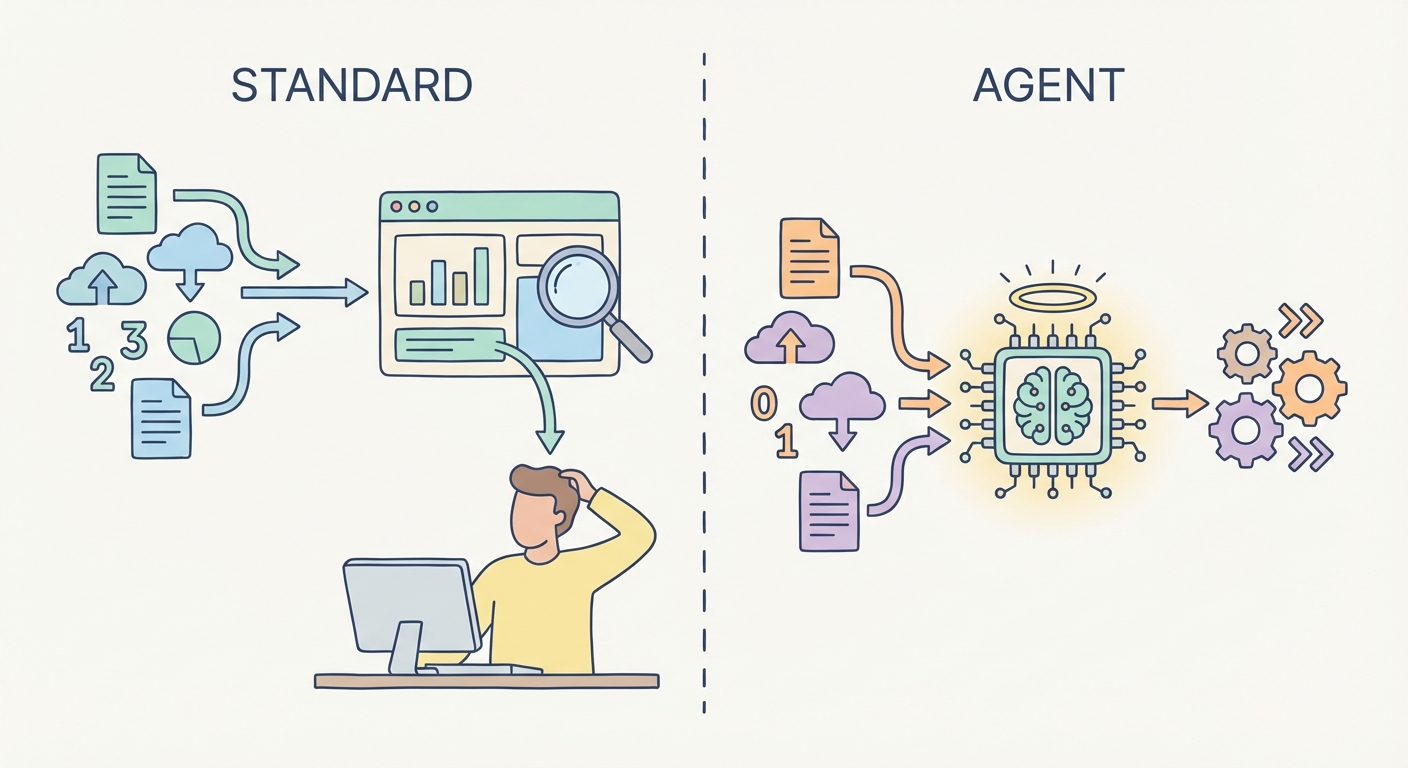
To understand the shift, you have to look at the difference between a tool and a teammate.
Traditional analytics tools are lazy. They are passive. They sit there, hoarding data, waiting for a human to interpret the squiggly lines. AI Agents, on the other hand, have jobs.
In 2026, an agent doesn't just log that "User A visited the pricing page." It thinks. It realizes that "User A has hit the pricing page three times since breakfast but hasn't pulled the trigger." It identifies the intent, flags the hesitation, and triggers a specific action to close the deal.
This is the "100% Interaction" reality. Agents now operate in the background of every single user session. They are invisible observers, processing data at a scale no human team could touch. A human analyst needs sleep, caffeine, and weekends. An AI agent has unlimited scale, predictive foresight, and runs in real-time.
To get how these agents think, we have to look at the predictive analytics models they stand on. The agent isn't guessing; it's running a continuous loop of hypothesis and validation.
How Do Customer Behavior Agents Actually Work?
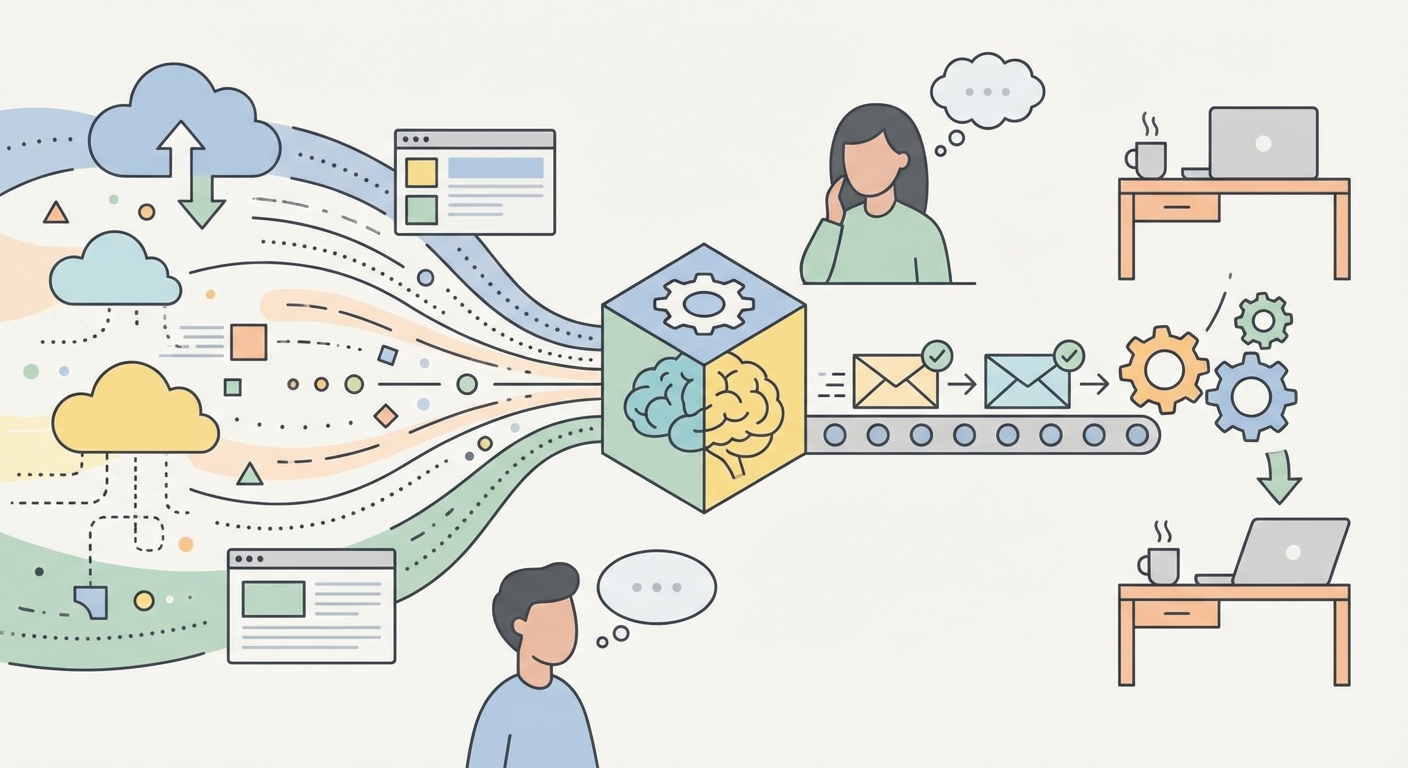
Let's kill the marketing fluff. How does the software actually think? The "magic" is just a structured workflow that turns raw noise into strategic action. It usually follows a three-step loop: Perception, Reasoning, and Action.
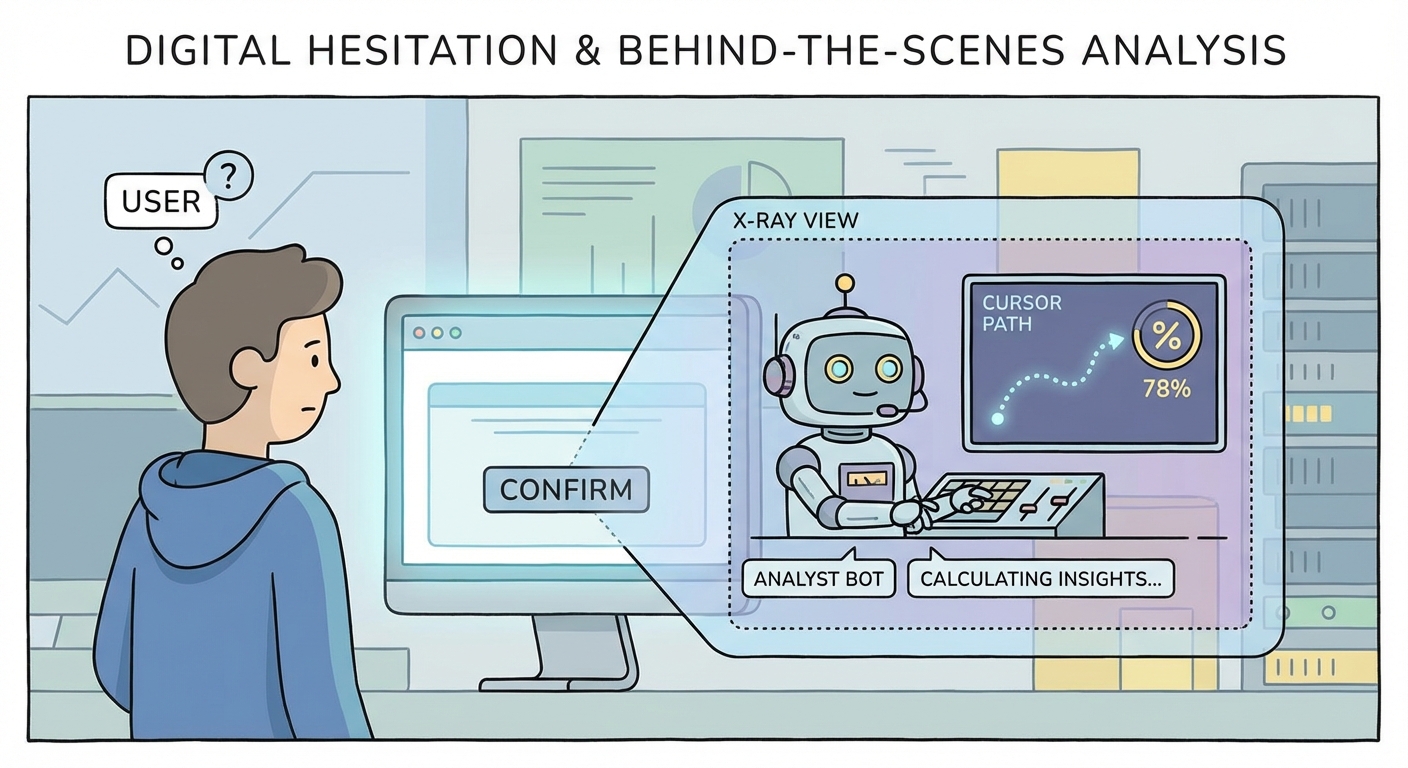
Step 1: Perception (The Input) The agent ingests raw clickstream data. But it’s not just counting page views. It’s reading the room. It measures "digital body language"—scroll depth, mouse velocity, and rage clicks. It sees the hesitation when a cursor hovers over the "Cancel Account" button but pulls away at the last second.
Step 2: Reasoning (The Brain) This is where the Large Language Model (LLM) steps in. It compares that current behavior against a massive library of historical "churn models" or "buying patterns." It asks the hard questions: Does this rapid tab switching mean they are comparison shopping, or are they just frustrated? It uses Vector Databases to recall past interactions, giving it a long-term memory that a simple script lacks.
Step 3: Action (The Output) This is the differentiator. Instead of waiting for a human to approve a move, the agent pulls the trigger. It triggers a webhook. It might send a re-engagement email, pop up a discount modal, or—if the client is a whale—wake up a human CSM via Slack.
3 High-Impact Use Cases for Autonomous Agents
We aren't talking about theory here. This is how high-performing teams are deploying these agents right now.
1. The "Pre-Churn" Intervention
The old way was asking, "Why did they leave?" The new way is, "Stop them from leaving."
Agents are now trained to sniff out the subtle behavioral signals that scream churn. We're talking about "rage clicks" on a dashboard that won't load, or rapid tab switching between your tool and a competitor's pricing page. When the agent detects this, it intervenes. It might offer a subscription pause or a discount before the user even clicks "cancel." As highlighted in ChurnZero's Customer Success Trends, the CSM role is shifting from managing accounts to managing the agents that save them.
2. Hyper-Personalization: The "Next Best Experience"
Kill your broad personas. "Marketing Manager Mike" is a useless segment when Mike is actually a technical user hunting for API docs, not a glossy PDF case study.
Autonomous agents enable "segment-of-one" marketing. The agent analyzes the user's specific journey to figure out the exact next step they actually want. If they are lingering on technical documentation, the agent doesn't offer a "Book a Demo" chat; it offers a "View API Keys" shortcut. McKinsey refers to this as the "Next Best Experience", validating the move toward predicting the precise micro-moment a customer needs.
3. Real-Time Sentiment Analysis (Non-Text)
You don't need a survey to know a customer is angry. You just need to watch how they move.
Agents analyze dwell time and navigation speed to distinguish confusion from curiosity. A user moving slowly through a setup wizard is learning; a user clicking back and forth rapidly is pissed off. We applied these exact behavioral techniques to help [Client Name] reduce bounce rates by 15% in our recent case study, proving that you can read minds without reading text.
The "Black Box" Problem: Can You Trust an AI Agent?
The nightmare scenario for any Head of Customer Success is a rogue agent. If an agent acts on its own, how do we know it won't hallucinate or offer a 90% discount by mistake?
The solution is Explainability. Modern agents provide "Reasoning Logs"—a transcript of why they made a decision. You can audit the logic: "I detected high frustration signals (rage clicks) on the billing page, so I triggered the 'Billing Support' priority workflow."
Trust also requires safety. In 2026, "Privacy by Design" isn't optional. This means PII redaction happens before data hits the model, and many enterprises opt for on-premise deployment. Platforms like Relevance AI now offer transparency templates that show exactly how the agent is configured to reason, ensuring the "black box" is actually a glass house.
Building Your "Centaur" Team: Human + AI
The goal isn't to fire your support team. It's to build a "Centaur" team—humans handling high-touch strategy, AI handling high-volume behavior analysis. The agent is the teammate that never sleeps, catching the signals a human would miss, and teeing up the human for the win.
Don't let your data sit in a dashboard gathering dust. Turn it into action. Ready to deploy your own autonomous workforce? Explore our Core AI Analytics Platform to get started.
FAQ Section
Q1: How are AI Agents different from traditional customer analytics tools? Traditional tools are historians—they report on past data. AI Agents are futurists. They analyze data in real-time to predict future actions and can autonomously intervene (like sending a message) to change the outcome.
Q2: Can AI Agents analyze customer sentiment without text data? Absolutely. By 2026, agents rely on "digital body language"—analyzing mouse velocity, dwell time, rage clicks, and navigation paths—to infer frustration or hesitation without the user ever typing a single word.
Q3: Is customer data safe when using autonomous AI agents? Yes. Modern agents are built with "Privacy by Design." They use PII redaction before processing data and often operate on local or private cloud instances, ensuring your customer data never trains public models.
Q4: How long does it take to train a behavior analysis agent? It's faster than you think. Unlike older AI models, modern agents use "zero-shot" or "few-shot" learning. They can often start identifying patterns immediately using pre-trained Large Language Models (LLMs), refining their accuracy within weeks of deployment.