Understanding AI Agents in Education

TL;DR
- This article covers the basics of ai agents in education, examining their types, benefits, and challenges. It explores real-world applications from personalized learning to automated grading, also addresses ethical considerations, and offers a practical guide for integrating these agents, and helps educators and administrators make informed decisions.
What are AI Agents and Why are They Relevant to Education?
Okay, so, ai agents in education, huh? Sounds kinda sci-fi, but it's more real than you might think. Ever wish your students had a personal tutor available 24/7? That's kinda what we're talking about.
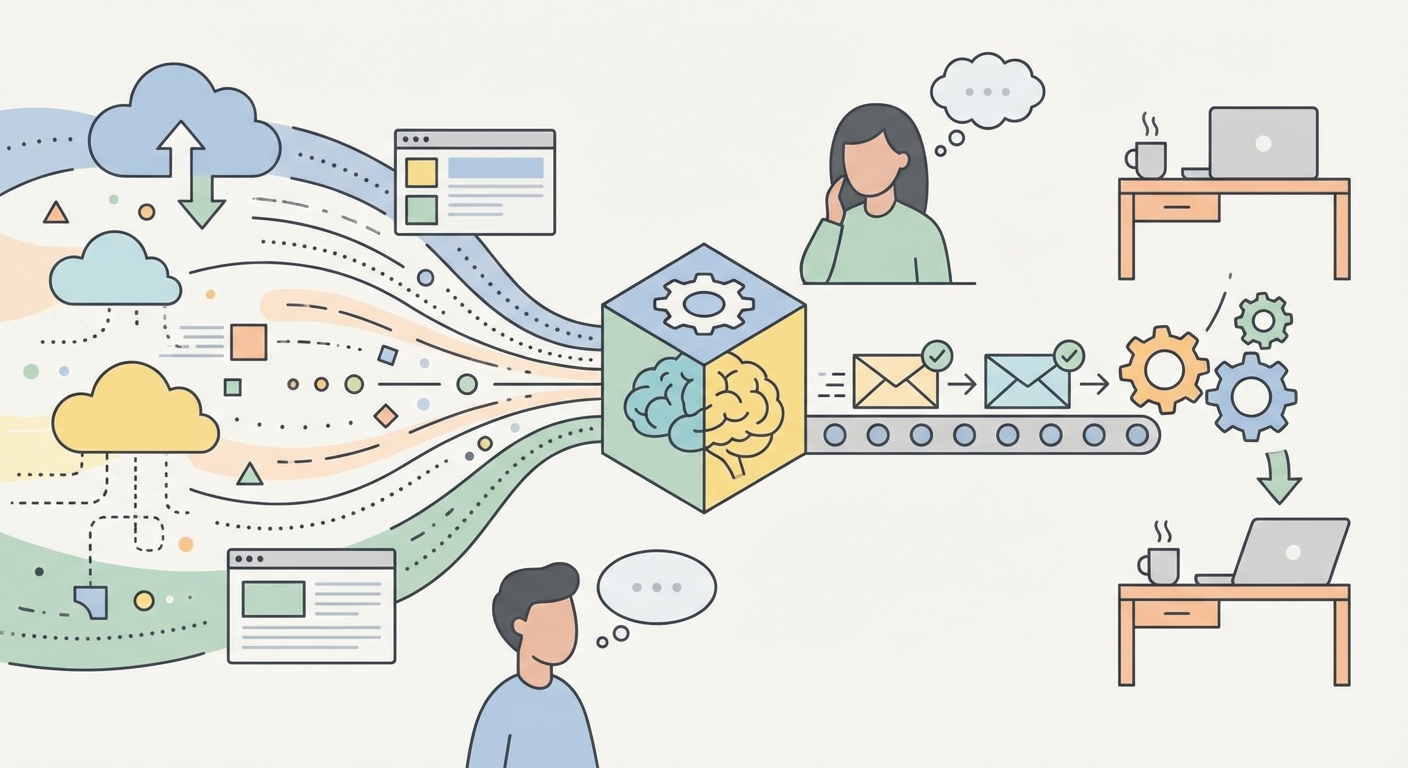
An ai agent is essentially a software program that can perceive its environment, make decisions, and take actions to achieve specific goals, all with a degree of autonomy. Think of it like a digital assistant that doesn't just follow commands but can figure things out for itself. It has components like:
- Perception: It takes in information from its surroundings (like student input or performance data).
- Decision-Making: It processes this information to figure out the best course of action.
- Action: It then carries out that action (like providing feedback or adapting a lesson).
They're relevant to education 'cause, well, education could really use some help these days! Think about it:
- Personalized learning: ai agents can tailor lessons to each student's needs. (AI Agents in Education: Top Use Cases and Examples - Workday Blog) No more one-size-fits-all!
- Teacher's aide: Grading papers, answering basic questions--ai agents can free up teachers' time for, like, actual teaching.
- Data insights: agents can track how students are doing and spot problems early.
It's not about replacing teachers, but empowering them. And, honestly, making learning a bit more engaging.
Key AI Agent Applications in Education
Okay, so, ai isn't just one thing in education; there's actually different types of agents being used. It's not like they're all the same robot teacher, y'know?
Here's a few main categories that are making a splash, and how they help:
- Intelligent Tutoring Systems: These are like super-personalized tutors. They figure out what a student is struggling with and adapt the lessons on the fly, offering tailored explanations and practice. This directly leads to more engagement and better grades as students get the support they need, when they need it. It is a bit like having a personal trainer, but for your brain.
- Automated Grading Systems: Think about the time teachers spend grading--it's nuts! These systems can take some of that load off by grading objective stuff automatically and giving some pretty detailed analytics. This frees up teacher time for more impactful activities. (Best Automated Grading Systems in 2025 - Fritz ai)
- Chatbots and Virtual Assistants: Need help at 3 am? Chatbots can answer FAQs, help with administrative tasks, and generally provide student support, even when no one is around. This ensures 24/7 availability of basic assistance. Library: Housatonic AI in Education: Understanding Artificial Intelligence (AI) - This source provides an overview of AI terminology, including chatbots.
- Content Recommendation Systems: These systems suggest resources, create curated learning paths, and basically deliver the right content to the right student at the right time. This enhances learning efficiency by connecting students with relevant materials.
Each one tackles different problems and brings something unique to the table, so it is worth knowing which is which.
Benefits of Implementing AI Agents in Education
Okay, so, ai agents aren't just some fancy tech toy; they can seriously boost how well students do. Think of it like this: what if every student had a super-attentive tutor?
- More engagement: Students get way more into learning when it's tailored to them. No more zoning out during boring lectures!
- Better grades: Personalized support means students actually grasp concepts and, yeah, their grades go up.
- Happier learners: When learning clicks, kids are more motivated and less stressed. It's a win-win!
- Increased accessibility: AI agents can provide support and resources to students regardless of their location or time constraints, breaking down traditional barriers to learning.
- Teacher empowerment: Plus, it's not just about the students. Teachers benefit too, as they can focus on more complex tasks and individual student needs.
So, yeah, ai agents? Pretty cool for improved student outcomes.
Challenges and Considerations When Using AI Agents
AI agents ain't a perfect solution--gotta be real about that. It's not all sunshine and roses, y'know? There's some serious stuff to think about before diving in:
- Educator Roles Change: Teachers need training to actually use these tools right. It's not just plug-and-play, and there is a learning curve. Educators might shift from direct instruction to becoming facilitators, curriculum designers, and mentors, focusing on higher-order thinking skills and socio-emotional development. Training could involve workshops on specific AI tools, pedagogical approaches for integrating AI, and understanding AI ethics. If they don't know how to use it, then it is pointless.
- Human Connection: Can ai really replace that human element? Prolly not. We need to keep that student-teacher bond strong; that connection is key, after all. Strategies for maintaining human connection include:
- Blended learning models: Combining AI-driven activities with in-person discussions and collaborative projects.
- Teacher-led discussions: Using AI-generated insights to spark deeper classroom conversations.
- AI as a supplement, not a replacement: Ensuring AI tools support, rather than supplant, meaningful human interaction.
- Data Privacy and Security: This is a biggie. Protecting sensitive student data is paramount. Educational institutions must implement robust security measures, ensure compliance with regulations like FERPA and GDPR, and be transparent with students and parents about how data is collected and used.
Real-World Examples of AI Agents in Action
Okay, so, ai agents in education sounds cool in theory, but what about real life? Turns out, they're already out there doin' stuff!
- Personalized learning platforms are getting smarter. Imagine a system that adapts to each student's pace. It identifies knowledge gaps and throws in extra practice where needed. It's like having a custom-made learning experience.
- Automated grading systems are saving teachers a ton of time, honestly. Think about it: Grading multiple-choice tests or basic assignments is a drag. ai can handle that, freeing up teachers to focus on, y'know, actual teaching and lesson planning.
- Chatbots are becoming virtual teaching assistants. These ai-powered helpers can answer common questions, provide resources, and offer support 24/7. It is great for students that need help at odd hours.
- Content recommendation systems are curating learning paths. ai can suggest relevant articles, videos, and exercises based on a student's interests and learning style. It is a bit like Netflix, but for education!
These examples show how ai agents are changing the game.
Future Trends in AI Agents for Education
The future of ai agents in education? it's not just textbooks going digital, that's for sure. Think more like personalized learning on steroids!
- Imagine ai tutors that actually understand what students are asking, not just spitting back canned answers. With advancements in natural language processing (nlp), ai agents can have more human-like conversations, making learning feel less robotic. For example, an NLP-powered agent could understand nuanced student questions about complex historical events and provide detailed, contextually relevant explanations, or even engage in Socratic dialogue to guide students to their own understanding.
- And it's not just about answering questions. Improved nlp means ai can better analyze student writing, giving more nuanced feedback on essays and reports. It is kind of like having a writing coach in your pocket.
- Forget boring textbooks; think immersive learning experiences! ai agents integrated with virtual reality (vr) and augmented reality (ar) could create interactive simulations, gamified education, and bring subjects to life. For instance, an AR-enhanced biology lesson could allow students to virtually dissect a frog on their desk, with an AI agent guiding them through the process and explaining each anatomical part.
So, yeah, the future looks pretty wild, huh?
How to Get Started with AI Agents: A Practical Guide
Alright, so you're ready to dive into ai agents? Sweet! Based on what we've talked about – the types, the benefits, and the challenges – it's time to think about how to actually do it. It's a bit like learning a new language, scary at first, but super rewarding once you get the hang of it.
Here's how to, like, not drown:
- Start small, think big: Don't try to overhaul everything at once. Pick one area where ai could really make a difference and focus there. For example, you could start by implementing a chatbot to answer frequently asked questions about school policies or course schedules. Or, try using an automated grading tool for multiple-choice quizzes to see how much time it saves.
- Don't be afraid to experiment: ai is still kinda new, so there's no one-size-fits-all solution. Try different tools, see what works for you, and, uh, don't be afraid to break stuff! Explore free trials of educational AI platforms, test out different AI-powered writing assistants with your students, or experiment with AI tools for lesson planning.
- Keep learning: ai is changing, like, every five minutes. Stay curious, keep reading, and don't get left behind! Follow educational technology blogs, attend webinars on AI in education, and connect with other educators who are exploring these tools.
It's a journey, not a destination.