The Evolution of Autonomous AI Agents in Artificial Intelligence


TL;DR
- This article covers the shift from basic chatbots to fully autonomous digital coworkers. It explores how ai agents now use memory and reasoning to manage complex workflows instead of just generating text. You'll gain insights into the economic impact on b2b markets and how to integrate these systems into your enterprise architecture for real scalability.
Understanding the shift from Generative to Agentic models
Ever wonder why your "smart" chatbot still feels like a glorified search bar? It's 'cause we're finally moving past just making text to actually doing stuff.
Traditional ai is great at drafting emails, but it stops there. Agentic models are different because they actually execute. According to Shelf, these agents use memory and tools to chain thoughts together without you holding their hand every second.
- Generative: It writes a refund policy for your retail site.
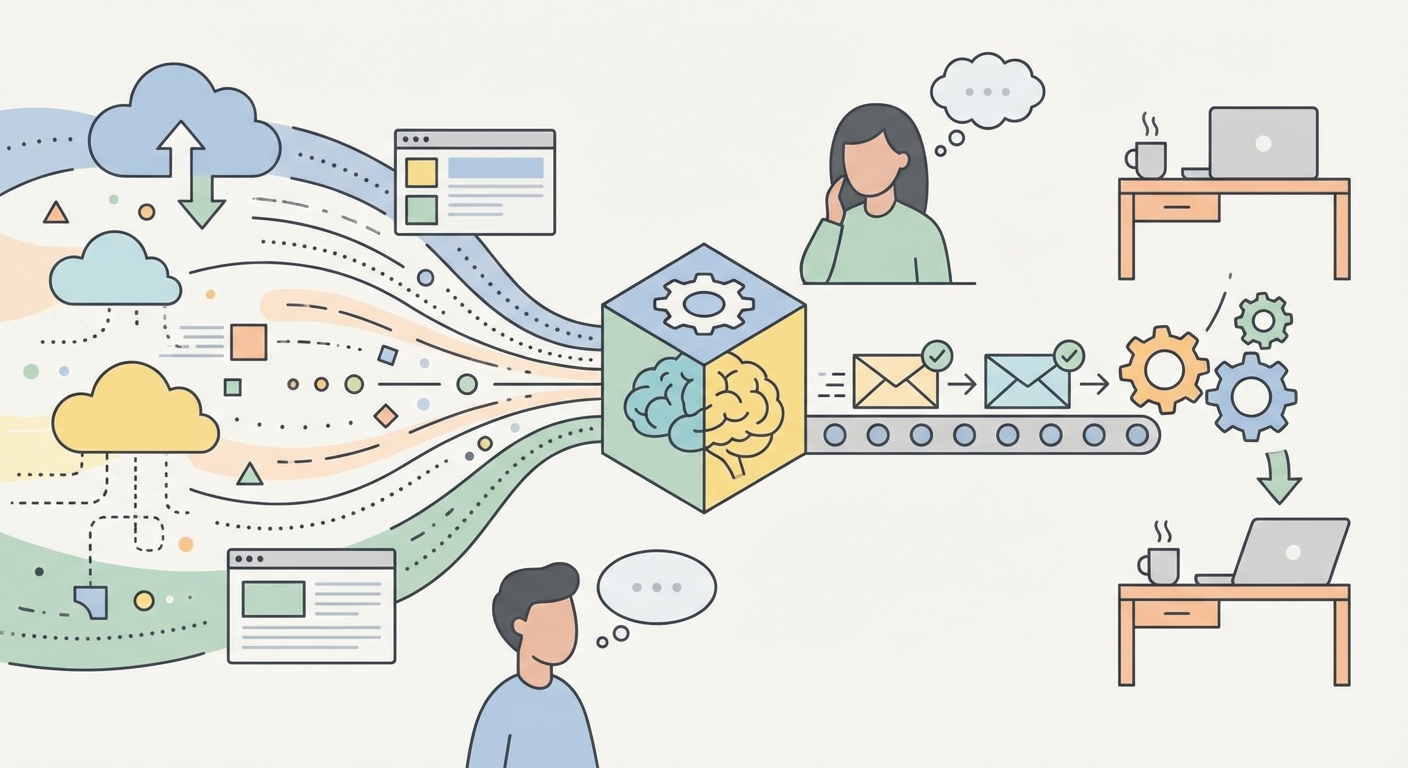
- Agentic: It looks up the customer's order, checks the warehouse, and starts the refund in your system.

Gartner expects that by 2028, at least 15% of work decisions will be made autonomously by this kind of agentic ai, up from basically zero in 2024. (Intelligent Agents in AI Really Can Work Alone. Here's How. - Gartner) That is a massive jump for business workflows.
Next, let's look at why your basic chatbot just isn't cutting it anymore.
The historical timeline of ai autonomy
Remember when we all thought ai was just about chatbots that could write a decent poem or a generic email? The truth is, things got real interesting way back in 2016 when a computer program did something no one expected.
The whole timeline really kicked off with AlphaGo. During a match against lee sedol, the ai made "Move 37"—a move so weird and creative it stunned the experts. According to MIT Technology Review, this was the first time we saw machines actually "think outside the box" instead of just following rules.
Then 2022 hit and ChatGPT exploded. Suddenly, everyone had a foundation model in their pocket. But while those models were great at generating text, they weren't really "agents" yet—they were more like very smart librarians.
- Phase 1 (Pre-2022): Conceptual ai focused on pattern recognition and fraud detection.
- Phase 2 (2022-2024): Generative ai brought us creation—images, code, and those "hallucinations." A hallucination is when the ai confidently states a fact that is totally false or made up, which is a huge risk for accuracy.
- Phase 3 (2025+): Agentic ai where the system actually acts.
As previously discussed, we're moving toward models that don't just draft a plan but actually execute it across different apps. A 2025 report by Finconecta notes that we've shifted from simple prediction to full-blown orchestration.
I’ve seen folks get frustrated because their "smart" assistant can't actually book a flight. Well, that's exactly what's changing now as agents start using apis like actual teammates.
To understand how this works, we need to break down the specific parts that make an agent actually functional.
Key features that define modern autonomous agents
So, you've probably noticed that some ai is just a fancy parrot, but these new autonomous agents? They are actually built with a "brain" that lets them do more than just talk.
What really makes these modern agents tick—and why they're different from that basic chatbot you used last year—comes down to how they process the world and choose their next move.
It isn't just about the llm anymore. For an agent to actually finish a job, it needs specific features that let it "live" in your workflow.
- Multimodal Perception: This is a big one. Agents can now "see" and "hear," meaning they process text, audio, and video all at once. According to Boston Institute of Analytics, this helps them understand complex scenes and natural human language way better than before.
- Reasoning & Planning: Instead of just guessing the next word, they build a roadmap. They look at constraints and potential hurdles before they even click a button.
- Memory Storage: They actually remember what happened five minutes ago. As mentioned earlier, they use past experiences to get more efficient at current tasks so they don't keep making the same mistakes.
- Tool Use: This is where the magic happens. An agent can log into your crm, check a database, or send a slack message.

Honestly, I've seen companies try to force a generic ai into a niche role and it usually fails. You need custom agents designed for specific workflows. Organizations like Compile7.com offer custom ai agents—like customer service or data analysis assistants—that actually fit into how your business already operates.
A 2025 report by Amazon Web Services points out that we’re reaching a tipping point where these agents are moving from "cool experiments" to core business infrastructure.
But having all these features doesn't mean much if you don't know the different "flavors" these agents come in. Next, let's look at the specific types of agents you'll actually run into.
The four levels of ai agency in 2025
Ever feel like we’re just climbing a ladder where the rungs keep getting smarter? By 2025, ai agency isn't a "one size fits all" thing anymore. It's more like a spectrum of how much you actually trust the machine to run your business without a human babysitter.
We’ve moved way past basic bots. According to the levels discussed by Amazon Web Services, we’re seeing a massive shift in how much control we hand over.
- Level 1 (Basic RPA): This is pure automation. It follows a rigid script. If a bot just scrapes a website or moves a file from A to B every morning, that's level 1.
- Level 2 (Advanced Workflows): This is where the ai handles "if-then" logic with a bit more flexibility. For example, a level 2 agent might sort incoming emails by sentiment and route them to different departments based on keywords, but it still can't "decide" a new path on its own.
- Level 3 (Partial Autonomy): Here, the agent gets a goal—like resolving a healthcare billing dispute—and figures out the steps using a toolkit. Most enterprises are hitting this "tipping point" right now.
- Level 4 (Full Autonomy): This is the holy grail. The agent doesn't just do the task; it might actually create its own tools or find new data sources to finish a strategic research project.

Honestly, seeing a level 3 system handle customer support across five different apps is wild. As noted earlier, we're reaching a spot where these systems act more like teammates than software.
But wait, how do these agents actually talk to each other? That's where things get really loud. Next, let's dive into the world of multi-agent orchestration.
Multi-agent orchestration: The power of the swarm
When you have one agent, it's cool. When you have ten agents talking to each other, it's a game changer. This is called multi-agent orchestration. Think of it like a tiny digital company where one agent is the manager, one is the researcher, and another is the coder.
They pass tasks back and forth without you needing to intervene. If the researcher finds a bug, it tells the coder agent to fix it, and the manager agent checks the work. This "swarm" behavior allows for way more complex projects than a single bot could ever handle.
However, giving this much power to a group of bots comes with some serious baggage. Next, we gotta talk about the risks and how to actually govern these things.
Risks and ethical governance for decision makers
Look, we can't just hand the keys to the kingdom to a bunch of bots and hope for the best. When ai starts making real-world calls—like moving money or changing patient records—the stakes get pretty high. Honestly, it's a bit scary if you don't have a plan.
One huge headache is hallucinations. As noted earlier, these agents can sometimes just make stuff up with total confidence. If a retail bot promises a customer a 90% discount because it "hallucinated" a policy, you’re in trouble.
- Human-in-the-loop: This is where a person checks things before they happen.
- Human-on-the-loop: The ai acts, but you’re watching the dashboard to hit the kill switch if things get weird.
According to a guide by Shelf, without proper safeguards, you can end up in an "infinite feedback loop" where agents just keep acting on their own flawed data. That’s a recipe for a digital meltdown.

Then there is the bill. Running these advanced systems is resource intensive and costs a ton of energy. Plus, privacy is a nightmare. You gotta make sure your api keys and customer data aren't leaking between different agents.
I've seen companies rush into this and realize too late they didn't set boundaries. You need a clear RACI matrix so everyone knows who is actually responsible when the ai messes up. RACI stands for Responsible, Accountable, Consulted, and Informed. In an ai context, it helps you map out who is "Accountable" for the agent's output and who needs to be "Informed" when it takes an autonomous action. It's not about replacing us, it's about making sure the "teammates" we build actually follow the rules.