AI Agents Transforming Healthcare Interactions

TL;DR
- This article cover the revolutionary impact of ai agents on healthcare interactions, from improving patient experience and streamlining communication to enhancing diagnosis and treatment processes. It also explores real-world applications, challenges, and future trends, with a focus on how businesses can leverage custom ai development for transformative solutions.
Introduction: The Rise of AI Agents in Healthcare
Are you ready for ai agents to become your new coworker in healthcare? It's not science fiction anymore. We're seeing ai agents popping up all over the place, and healthcare is no exception.
Here's the deal:
- ai agents are more than just chatbots; think of them as digital assistants that can learn and act on their own.
- They are different from traditional software because they can adapt and improve over time. It's not just about following a script.
- The healthcare industry is ripe for ai disruption, and it needs it, if you ask me.
Healthcare systems are, let's be honest, pretty inefficient right now. ai agents can step in to:
- Streamline processes, like appointment scheduling and patient follow-ups.
- Improve patient experience by offering personalized support and information.
- Reduce the load on healthcare workers, letting them focus on critical tasks.
As Mahesh Divakaran points out, ai is rapidly changing healthcare, especially in diagnostics and patient care.
Next up, we'll look at how ai agents are specifically being used to improve interactions.
Enhancing Patient Experience Through AI Agents
Okay, so have you ever been stuck on hold with a doctor's office for like, forever? ai agents are trying to fix that, and honestly, it can't come soon enough.
Here's how they're stepping up the patient experience game:
Personalized Support and Information
- Around-the-clock support: Forget waiting for office hours. ai virtual assistants can answer common questions 24/7. Need to know if you should take your meds with food? ai can probably handle that.
- Customized Communication: ai can tailor communication based on a patient's history and preferences. This means you get relevant information, not generic advice, which, honestly, is a breath of fresh air.
- Emotional Support: Healthcare can be scary. ai agents can provide emotional support and reduce anxiety by answering questions and offering reassurance.
Streamlined Processes
- Scheduling Simplified: ai agents are making scheduling and follow-ups way easier. Instead of calling, patients can book appointments or reschedule via chat. Think of it like having a personal assistant for your healthcare needs.
- Medication and Appointment Reminders: ai agents can send reminders for medications and appointments. Life gets busy, and sometimes we forget.
- Feedback Collection: ai can gather patient feedback to improve service quality. This is crucial because it allows healthcare providers to adapt and better meet patient needs.
Navigating the Healthcare Journey
- Hospital Navigation: Getting lost in a hospital is, like, a universal experience. ai chatbots can guide you to the right department, which is a lifesaver when you're already stressed.
- Insurance and Billing Assistance: Dealing with insurance is a nightmare. ai chatbots can help answer billing inquiries and navigate insurance processes.
- Pre- and Post-Care Guidance: ai agents can provide instructions before and after appointments. For example, reminding you to fast before a blood test or explaining how to care for a wound after surgery. No more forgetting what the doctor told you, because let's be real, that happens to everyone.
ai agents can also help improve operational efficiency in hospitals. Mahesh Divakaran notes that ai is improving hospital management, which ultimately benefits patients.
Next up, we'll look at how AI is improving efficiency for healthcare professionals.
Streamlining Healthcare Communication and Workflow
Okay, so, you know those old medical dramas where doctors are always yelling for someone to get them a chart, stat? ai agents are kinda like that, but way faster and without all the yelling. It's about getting the right info to the right person at the right time, and doing it without anyone having to sprint down a hallway.
Enhancing Communication Channels
- Secure Information Sharing: ai agents make it easier – and safer – for doctors, nurses, and other staff to share information. Think encrypted messaging apps that automatically pull up relevant patient data, so you aren't, like, accidentally texting sensitive stuff on an unsecure line.
- Reducing Communication Bottlenecks: ai can filter and prioritize communications, ensuring critical alerts reach the right people immediately. No more drowning in emails about which break room snacks are back in stock when you really need to know about a patient's dropping vitals.
Automating Administrative Tasks
- Automated Task Assignments: Ever played telephone and the message gets all jumbled? ai can prevent that. It can automatically assign tasks based on staff availability and skill sets, ensuring everything gets done and nothing falls through the cracks.
- Managing Patient Records: ai can automate the entry, updating, and retrieval of patient records. Which means less time spent on paperwork and more time, you know, actually helping people.
- Processing Insurance Claims: Let's be real, nobody likes dealing with insurance. ai can automate claim submissions, track statuses, and even flag potential issues, freeing up staff to focus on more important stuff.
Improving Data Integration and Compliance
- Generating Reports and Analytics: ai can generate reports on everything from patient outcomes to resource utilization, providing insights that help hospitals and clinics make better decisions.
- Integrating Disparate Systems: ai agents can act as translators, enabling different systems to communicate seamlessly. This means doctors can access a patient's complete medical history, even if they've been treated at multiple hospitals.
- Ensuring Compliance with Data Privacy Regulations: Nobody wants their personal medical info leaked. ai can help ensure data is shared securely and in compliance with regulations like hipaa.
Imagine trying to plug a European appliance into an American outlet – that's kinda what it's like when different healthcare systems try to share data. ai can help bridge those gaps.
So, yeah, ai agents are basically like super-efficient digital assistants that can help streamline communication and workflow in healthcare. Next up: How AI is being used to improve interoperability between different healthcare systems.
AI Agents in Diagnosis and Treatment
Okay, so you're probably wondering how ai agents are muscling their way into diagnosis and treatment, right? It's kinda mind-blowing when you think about it, but it's happening. ai agents are entering diagnosis and treatment by analyzing vast amounts of patient data, medical literature, and imaging to identify patterns and anomalies that might be missed by human observation alone.
- ai-Powered Diagnostic Tools: Imagine ai sifting through medical images like x-rays or mris looking for stuff way faster than a human could. We're talking early detection of diseases, like, you know, catching something like lung cancer when it's actually beatable. It's not about replacing doctors, it's about giving them a super-powered assistant.
- Personalized Treatment Plans: Forget one-size-fits-all treatments. AI agents can analyze a patient's data, genetic makeup, lifestyle--the whole shebang--to tailor a treatment plan specifically for them. This could mean better outcomes and fewer side effects.
- Remote Patient Monitoring: ai isn't just stuck in the hospital, either. They can monitor patients remotely, tracking vital signs and alerting healthcare providers to potential problems before they become emergencies. Think wearable sensors feeding data to ai, which then flags any red flags.
It's like having a 24/7 health bodyguard. Mahesh Divakaran notes that ai is indeed making waves in diagnostics and patient care, so it's not just hype, either.
So, yeah, ai agents are stepping up big time in diagnosis and treatment. Next, we'll dive into how ai agents can help with remote patient monitoring.
Real-World Applications and Case Studies
So, you wanna see how this ai agent stuff actually plays out? It's not just pie-in-the-sky ideas, I swear. Let's get real.
- Appointment Scheduling Revolution: Imagine a chatbot that doesn't just book appointments, but also preps patients, answers their anxieties, and even sends reminders. It's like having a super-organized, always-on receptionist. the result? Reduced no-show rates and happier patients.
- Remote Monitoring Magic: What about patients with chronic conditions? ai agents can track their vitals, notice patterns, and alert doctors to potential problems before they become emergencies. Think wearable tech meets predictive analytics.
- Smarter Data Analysis: instead of humans manually crunching numbers, ai agents can quickly identify trends in patient data, helping hospitals optimize resource allocation and improve patient care, as Mahesh Divakaran pointed out earlier, ai is revolutionizing diagnostics and patient care.
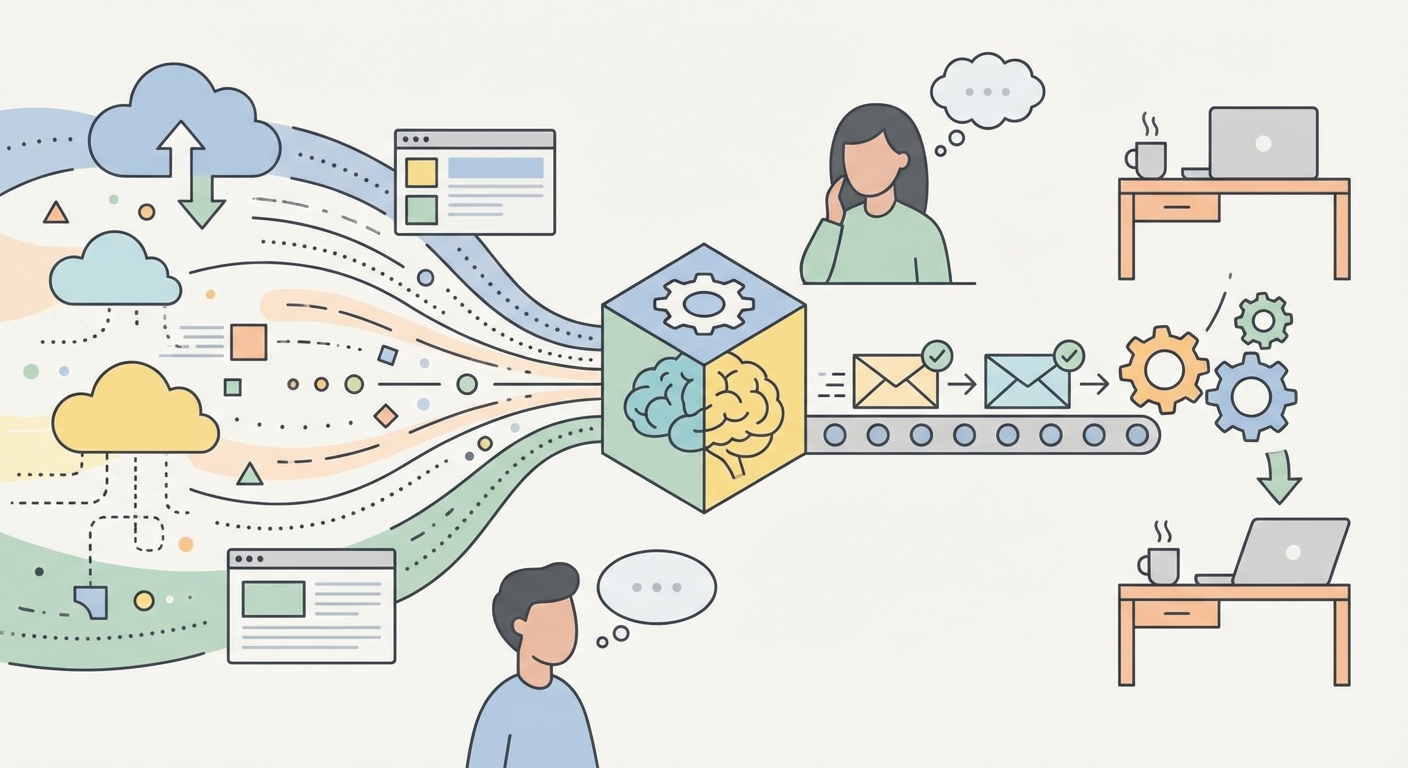
This flowchart illustrates a typical patient journey with AI assistance:
It's not just about cutting costs; it's about making healthcare more proactive and personalized. Next up, we dig into ethical considerations and challenges, because, well, there's always a catch, right?
Challenges and Considerations
Okay, so ai agents in healthcare sound awesome, right? But- it's not all sunshine and rainbows. There are definitely some bumps in the road we got to watch out for.
First up: data privacy and security. I mean, we're talking about incredibly sensitive patient information here. We gotta make sure we're following all the rules, like gdpr and hipaa. If you don't, there will be problems. Like, big problems.
It's not just about following rules. You need solid security to stop hackers, and think about how the data is being used ethically.
Then there's the whole integration thing. It's, like, trying to get different brands of smartphones to talk to each other. Healthcare systems are all using different software, and getting them to play nice with ai agents? It's going to be a challenge.
Data migration and making sure everything is compatible is key.
And, honestly, ai isn't perfect. We need human oversight. ai is there to help doctors and nurses, not replace them. It's easy to think ai can automate everything, but someone's gotta be there to make sure the ai isn't making biased decisions or just plain getting it wrong, you know?
This flowchart highlights the importance of human review in AI systems:
So, yeah, ai agents have huge potential, but we gotta be smart about how we're using them. Next up, we'll talk about future trends and opportunities.
Future Trends and Opportunities
So, what's next for ai agents in healthcare? It's not just about chatbots anymore; we're talking about a future where ai is deeply integrated into pretty much everything.
Advancements in ai technology are going to keep pushing the boundaries. Think machine learning getting even smarter, making it easier to predict patient needs and personalize treatments. Natural Language Processing (nlp) will improve how ai agents communicate, making interactions feel less robotic and more, well, human. and don't forget computer vision; it's set to revolutionize medical imaging, helping doctors spot things they might otherwise miss.
Expanding Applications is another big one. ai agents could offer mental health support, providing a listening ear and guidance to those who need it. They will speed up drug discovery, helping researchers find new treatments faster. and in public health, ai agents can track diseases and help prevent outbreaks.
Custom ai Development will be key. Off-the-shelf solutions are okay, but tailored ai solutions are way better for specific needs. For example, a custom ai agent designed for a cardiology practice could analyze ECG data with a level of specificity that a general-purpose ai might miss, leading to earlier detection of subtle arrhythmias. Working with ai developers to create custom agents ensures these solutions align with business goals.
This flowchart shows the pathway from data to improved outcomes through custom AI:
Basically, the future of healthcare interactions is looking pretty ai-powered. It's all about making things more efficient, personalized, and accessible for everyone.