AI Agents Revolutionizing Contract Negotiations

TL;DR
- This article explores how ai agents are transforming the legal and procurement landscape by moving beyond simple templates to autonomous negotiation. We cover the shift from manual redlining to real-time risk assessment and data-driven clause recommendations. You will learn how enterprise leaders use these tools to shorten deal cycles and ensure compliance across global markets while maintaining strategic oversight.
The death of manual redlining
Ever spent three hours arguing over a "limitation of liability" clause only to realize you missed a typo in the payment terms? It's honestly exhausting, and frankly, it's a miracle more deals don't just fall apart from pure boredom.
We've all been there—staring at a screen full of red lines, trying to figure out if the legal team in the UK actually saw the edits from the finance guys in New York. The manual way of doing things is just too slow for how fast we move now. According to Rizwan Alam, these hidden inefficiencies and manual bottlenecks in procurement lead to massive delays and frustrated teams. (Procurement Intelligence: Guiding Decisions, Not Replacing People)
- Slow reviews kill deals: When a contract sits in a lawyer's inbox for a week, your sales team loses momentum.
- Human error is real: People get tired. They miss things in the fine print, which leads to compliance risks that pop up months later.
- Silos are everywhere: Legal, finance, and procurement rarely talk to each other in real-time, creating a mess of unstructured data.
In fact, SimpliContract points out that nearly 80% of contract data is trapped and invisible to enterprise systems. That's a huge amount of risk just sitting there because nobody has the time to manually tag every single obligation.

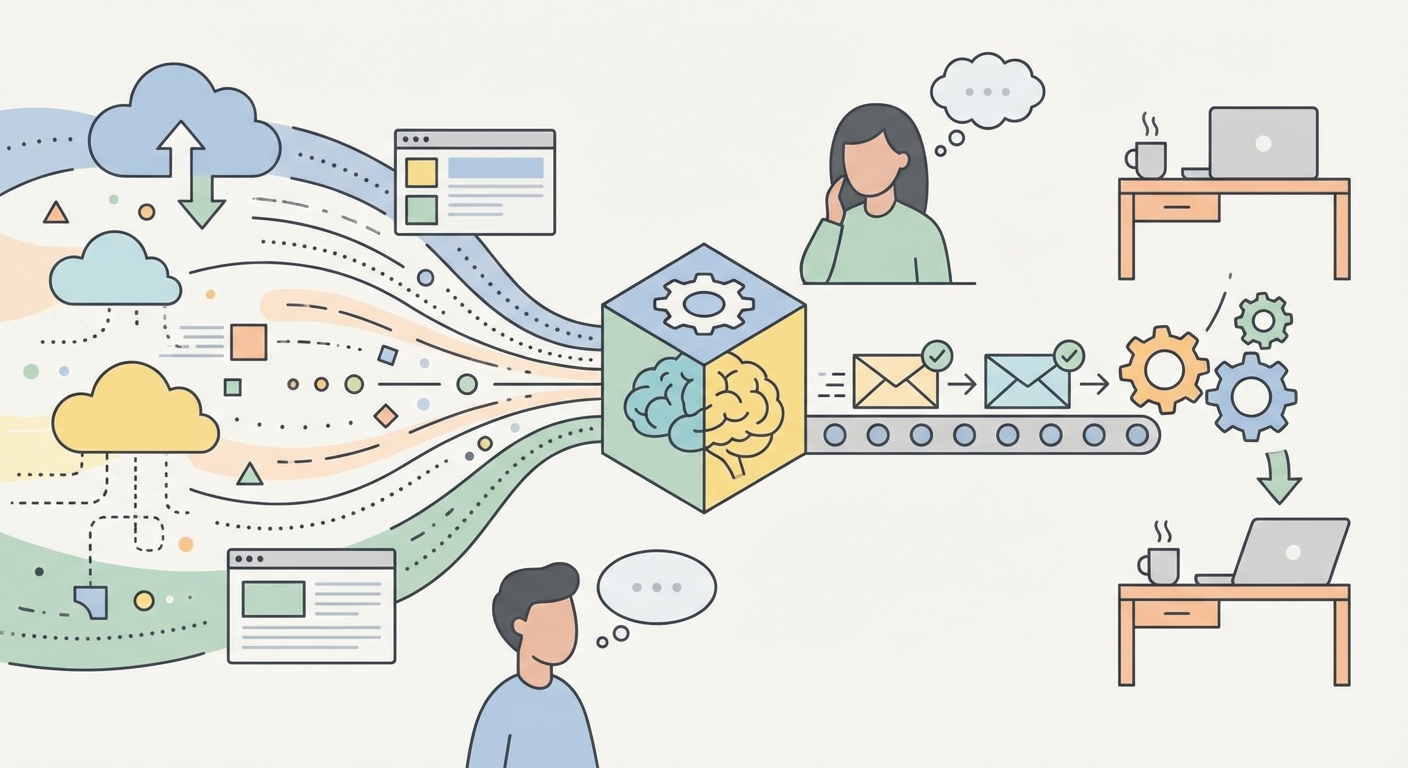
But things are changing fast. We aren't just talking about basic templates anymore; we're moving into the world of agentic AI. These systems don't just "read" text; they understand the intent. According to AI Agents For All the Industries, by 2026, negotiations won't be driven by instinct but by data-driven insights and smarter clause recommendations.
"LLMs can quickly review lengthy contracts, identify key clauses, flag potential risks, and ensure compliance." — datamainstay
It's pretty wild to see in practice. Imagine a retail company where the AI agent automatically flags that a vendor's SLA doesn't match the company's standard requirements and suggests a fix immediately. No more waiting.
Next, we'll look at how these agents handle redlining, playbooks, and the heavy lifting of real-time risk scoring.
How AI agents actually negotiate for you
So how does an AI agent actually sit across the table—metaphorically—and negotiate for you? It’s not just about searching for keywords anymore. These agents are basically becoming digital bridge-builders between what your legal team wants and what the other side is willing to give.
Instead of you digging through a 50-page PDF to find that one weird clause about "force majeure," the agent is already three steps ahead. It’s comparing the draft against your own company playbooks in real-time.
- Instant risk scoring: Before a human even opens the doc, the AI can score the deal. High risk might mean a weird liability cap that doesn't follow GDPR or other latest regulations.
- Playbook-driven redlining: The agent looks at your internal "gold standard" for clauses. If a contract says "90-day payment terms" but your policy is "30 days," it swaps it out immediately.
- Contextual suggestions: It understands that a contract for a healthcare provider needs different liability limits than one for a coffee shop. It pulls language that has actually been approved in similar past deals.
- Strategy over busywork: By handling the tedious redlining, tools like Compile7 help businesses build custom agents so your experts can focus on the actual strategy of the deal, not font sizes.

One of the biggest headaches is that "hidden exposure" Ecognition Labs talks about—those tiny details like renewal clauses or missing SLAs that turn into massive costs later. Agents are great at catching these because they never get tired.
- Cross-functional alignment: As noted earlier by Rizwan Alam, information silos usually kill speed. An AI agent can pull in data from finance and legal simultaneously to make sure everyone is on the same page.
- Scalable integrity: For companies working across borders, Sean H. mentions that keeping governance consistent is key. The agent ensures the same rules apply whether you're signing a deal in London or New York.
It’s honestly a bit of a relief to let a machine handle the "gotcha" moments in the fine print. You end up with shorter deal cycles because you aren't waiting for a lawyer to spend four days "getting around" to a basic review.
Next up, we’re going to dive into how these agents use data-driven leverage to win the actual negotiation.
Winning the negotiation with data driven leverage
Ever wonder why some companies always seem to get the better end of a deal while everyone else is just happy to survive the meeting? It isn't just luck or having a louder voice; it's about who has the better "memory" of every deal ever signed.
The real magic happens when you stop guessing what a vendor might accept. Most AI agents today can scan thousands of past contracts to find exactly where a supplier usually caves. If you know that a specific cloud provider has accepted a 15% discount on bulk seats in 4 out of 5 similar deals, you aren't just asking—you're stating a fact.
- Identifying the "Cave" Points: Agents look for patterns in redlines. They might notice a vendor always fights on indemnity for two rounds but gives up if you trade it for a slightly longer termination notice.
- Shortening the Cycle: Instead of the usual back-and-forth, the AI suggests the "optimal middle ground" immediately. This can shave weeks off a deal because you aren't wasting time on terms that were never going to be a dealbreaker anyway.
- Spend Insights: As datamainstay mentioned earlier, processing unstructured data helps identify spend patterns that humans miss. It turns a messy pile of docs into a clear map of where your money is actually going.

Managing a deal in London is one thing, but trying to keep those same standards when you're signing in Singapore or New York is a total nightmare. Laws change, but your company’s "core rules" shouldn't have to.
As Sean H. noted previously, keeping governance consistent across borders is huge for trust. An AI agent acts like a global gatekeeper. It knows that while the GDPR rules apply in the EU, a different set of local privacy laws might trigger in California—and it adjusts the contract language automatically without you needing a law degree in five different countries.
- Local Logic, Global Standards: The agent applies "localized AI logic" to ensure you meet regional legal requirements while still hitting your internal quality thresholds.
- Uniform Thresholds: Whether an office in Berlin or Tokyo is buying software, the AI ensures they aren't accidentally signing away intellectual property or agreeing to weird liability caps.
- Real-time Compliance: Instead of waiting for a quarterly audit to find out you broke a local rule, the agent flags the risk before the ceo even sees the pen.
It’s about having that "data-driven leverage" so you’re never the one caught off guard. Next, we're going to see how these agents keep working long after the ink is dry by tracking actual performance.
The technical architecture of a legal AI agent
Ever wonder what's actually happening under the hood when an AI agent rewrites a clause in seconds? It’s not just a fancy search-and-replace; it is a complex web of data that connects your dusty old pdfs to your actual business goals.
The biggest problem right now is that most contract data is basically "dark data." As we saw earlier from SimpliContract, about 80% of this stuff is unstructured and invisible to your erp or crm systems. To fix this, a legal AI agent builds what we call an enterprise knowledge graph.
- Unstructured to Structured: The agent uses LLMs to extract entities and obligations, turning a messy paragraph into a clean data row.
- Workflow Integration: It connects these terms directly to your systems. If a contract says you get a rebate after $1M in spend, the agent pokes your finance software to make sure you actually collect it.
- Contextual Awareness: By linking past deals, the graph knows that "Standard Liability" for a retail partner is totally different than for a fintech startup.

To make sure the AI doesn't just hallucinate some weird legal term, these systems use RAG (retrieval augmented generation). Instead of relying on what the model learned during training, it "looks up" your specific company playbook first. This keeps the agent grounded in your actual rules, not some random internet law.
Once you let an agent start suggesting changes, the boardroom starts getting nervous. AI governance has moved from a "maybe later" thing to a "must-have" right now. Honestly, nobody wants an agent going rogue and agreeing to a 99-year indemnity clause because it got confused.
This is where specialized governance comes in. Companies like SUPERWISE provide observability platforms that monitor AI models for bias or "drift" in real-time, ensuring the agent doesn't start making weird decisions. Governance isn't just an IT checkbox anymore—it is a strategic advantage.
- Board-Level Visibility: Governance needs to report straight to leadership so they know exactly how the AI is making decisions.
- Active Oversight: Forget static policy docs. You need real-time monitoring that flags if an agent tries to deviate from the "gold standard" playbook.
- Audit Trails: Every single redline the AI suggests needs a timestamp and a "reason why."
"A single unchecked decision by an agentic model can impact revenue and reputation instantly." — Sonil Gandhi, an expert in AI trust and safety.
In the healthcare industry, agents use these architectures to ensure every vendor contract hits strict HIPAA requirements. If a data processing agreement is missing a specific privacy safeguard, the knowledge graph flags it against the latest regulations immediately. Meanwhile, in the energy sector, agents track complex "take-or-pay" clauses across massive infrastructure projects to ensure the company isn't paying for resources they didn't actually use.
It’s about making sure your AI is smart, but also obedient. Next, we’re going to wrap things up by looking at how you actually start deploying these agents without breaking your existing legal workflows.
The future of procurement and CLM
So, where does all this leave us? honestly, the days of procurement being a "black box" where contracts go to die are pretty much over.
We're moving into a time where your CLM doesn't just store files, it actually thinks about them. By 2026, we're looking at a world where global enterprises won't be guessing during a negotiation—they'll be using real-time data to win, as mentioned earlier by the team at AI Agents For All the Industries.
The biggest shift is going to be how we handle the stuff after the signature. Most companies leave money on the table because they forget to trigger a rebate or miss a price adjustment.
- Auto-extracting obligations: Instead of a junior lawyer highlightning pdfs, the AI pulls out every deadline and drops it into your calender.
- Stopping revenue leakage: If a vendor in the retail industry fails to meet a shipping window, the agent flags the performance deviation immediately so you can claim your credits.
- Predictive risk: In manufacturing, agents can monitor "raw material price" escalators across thousands of agreements to make sure you're always getting the best rate without a human having to check every month.

If you're sitting there thinking this sounds like a lot, you're not wrong, but you don't have to boil the ocean on day one.
- Find the bottleneck: Is it the three weeks it takes to get a non-disclosure agreement signed? Start there.
- Build vs Buy: You can grab off-the-shelf tools, but you gotta vet those third-party models for compliance first. Organizations like the IEEE Standards Association have released guidelines like IEEE 7000, which helps companies ensure their AI systems are ethically aligned and transparent. You don't want a "plug-and-play" tool that leaks your trade secrets.
- Train the humans: Your team might be scared of the AI, so show them how it handles the "boring" redlining so they can do the actual high-level strategy.
A 2025 report from IDC MarketScape suggests that unified AI governance platforms are now a "must have" for companies moving these agents into production.
Honestly, I've seen teams go from "this is too complex" to "how did we ever live without it" in just a few months. It's about making the AI a partner, not just another piece of software.
The future isn't about robots replacing negotiators—it is about negotiators having the best data in the room. And usually, the person with the best data wins. Ready to get started?