7 Types of AI Agents to Enhance Workflow Automation

TL;DR
- This article covers the seven types of AI agents, from simple reflex agents to multi-agent systems, and how they're transforming workflow automation. It highlights their specific applications across industries, benefits, and challenges and future impact on business practices. Plus, get real-world examples to see how these agents boost efficiency and innovation.
Understanding AI Agents and Workflow Automation
I always wondered how much easier work could be with a little ai help. Turns out, ai agents and workflow automation are kinda a big deal.
- AI Agents: They're like digital assistants that can perceive, decide, and act – all on their own!
- Workflow Automation: This is all about making those boring, repetitive tasks a thing of the past. Think claims processing in healthcare or even managing customer queries in retail.
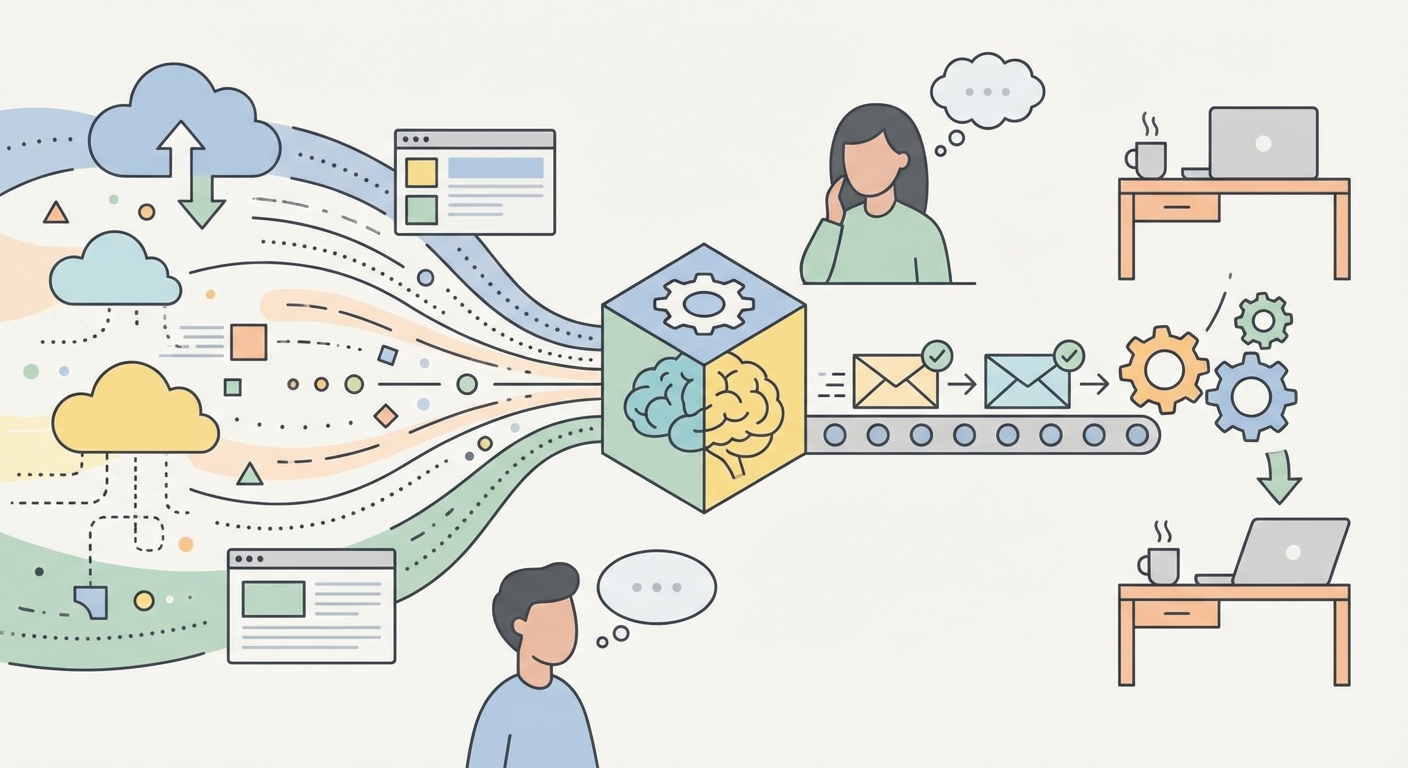
- The Magic Combo: When you put ai agents and workflow automation together, you get smarter, faster, and way more personalized processes.
Imagine ai learning and adapting to your needs, making things run smoother. On top of that, you get enhanced decision-making, too. Next up, let's get into what ai Agents actually are.
The 7 Types of AI Agents: A Detailed Look
AI agents, y'know, they aren't just chatbots. They're evolving, and it's kinda wild to see how many different types there are now.
Well, each type is designed for different scenarios. It's not a one-size-fits-all kinda thing. You got your simple ones, your complex ones, and everything in between. xbeekon.com does a good job breaking them down and how they will supercharge automation in 2025, so i'll lean on them here. These 7 types cover a good range from basic to advanced.
- Simple Reflex Agents: These guys are all about reacting to the here and now. Think of a thermostat: it sees the temp, and boom, it adjusts. No memory, no learning, just simple rules. A safety shutdown sensor in a factory is another great example.
- Model-Based Reflex Agents: Now we're getting a little smarter. These agents have a model of their environment. So, they remember stuff and can handle situations where the immediate input is a little fuzzy. Like, a smart home security system that can tell the difference between your cat and an actual intruder.

- Goal-Based Agents: These agents have goals, duh. They plan out sequences of actions to get where they need to be. Like automated robots in a warehouse optimizing routes.
- Learning Agents: These guys are the cool kids – they learn from their mistakes (and successes) and adapt. Think of Netflix's recommendation engine. It gets better over time as it learns your tastes.
- Utility-Based Agents: Utility-based agents are all about maximizing the overall "goodness" of their actions. They weigh different outcomes and pick the one that gives the most benefit. A stock trading bot that's trying to make the most profit while minimizing risk is a good example.
- Hierarchical Agents: These agents work like a team, with a boss agent breaking down tasks for the little guys. It's like a factory where different agents handle different steps.
- Multi-Agent Systems (MAS): And finally, we got Multi-Agent Systems. This is where you have a bunch of agents working together, either helping each other or competing, in the same environment. Think decentralized traffic management.
So, yeah, that's the rundown on ai agent types. These agents are key to making workflows smarter and faster.
Real-World Applications and Benefits
I've always been curious about how ai agents actually translate into real-world impact. So, let's get into it, shall we?
- Automating routine tasks: ai agents are taking over those repetitive, time-consuming jobs. Think claims processing in healthcare – freeing up staff to focus on patients, not paperwork. This directly streamlines workflows.
- Reducing operational costs: By automating tasks, ai agents are cutting down on errors and the costs which come with them. Less human error, means less money wasted on fixing mistakes, y'know? This also means more efficient workflows.
- Improving business output: With ai handling the mundane, businesses are seeing a bump in overall productivity and that results in better business outcomes. Smarter workflows lead to better results.
- Personalized Customer Experiences: ai agents can analyze customer data to tailor interactions, offering relevant product recommendations or support, making each customer feel valued and understood. This is a big win for customer service workflows.
It's not just about cutting costs; it's about making things run smoother and more efficiently.
Challenges and Considerations
Okay, so you're thinking ai agents are all sunshine and rainbows? Not so fast. There's a few bumps in the road to consider...
- Resource Demands: These agents can be resource hogs, requiring serious computing power and skilled folks to keep 'em running.
- Human Oversight: You can't just set it and forget it; someone's gotta keep an eye on things to avoid unintended consequences.
- Risk Management: Poor agent design can create infinite loops, wasting resources and messing with data. For example, an agent designed to process customer feedback might get stuck in a loop if it encounters an unexpected data format, continuously trying to process the same faulty input and consuming server resources without making progress, potentially corrupting logs or even the feedback database itself.
It's a bit of a balancing act, honestly.
The Future of AI Agents in Business
Okay, so you've read about ai agents and how they can automate, like, everything. But what's next? Let's peek into the crystal ball, shall we?
Well, it's looking like ai agent adoption is gonna blow up. Seriously. We're talking about increased integration across all sorts of industries – healthcare, finance, even your local retail store.
- Expect growth in ai agent adoption. This ain't a fad; it's the future.
- Integration across industries is gonna ramp up.
- We'll see a shift towards systems that are more autonomous, they can basically run themselves. But also more collaborative, where ai and humans are working together.
Don't just jump on the bandwagon without a plan. That's a recipe for disaster.
- First, do a strategic needs assessment. This means really digging into what problems you're trying to solve with ai agents and what specific workflows they'll improve. It's about identifying the biggest pain points and where automation will have the most impact.
- Prioritize ethical guidelines and transparency. This involves setting clear rules for how your ai agents will operate, ensuring they're fair, unbiased, and that you can explain their decisions. Knowing how your ai works builds trust and prevents issues down the line.
- Continuous monitoring and adaptation is key. These systems aren't perfect out of the box so pay attention to the data. You need to constantly check how your agents are performing, gather feedback, and be ready to tweak them as your needs or the environment changes.
It's not just about throwing tech at a problem, it's about thinking it through. Implementing the right ai agent can seriously boost your workflow, but only if you do it smart. Keep an eye on these trends and plan carefully, and you might just be ahead of the curve.